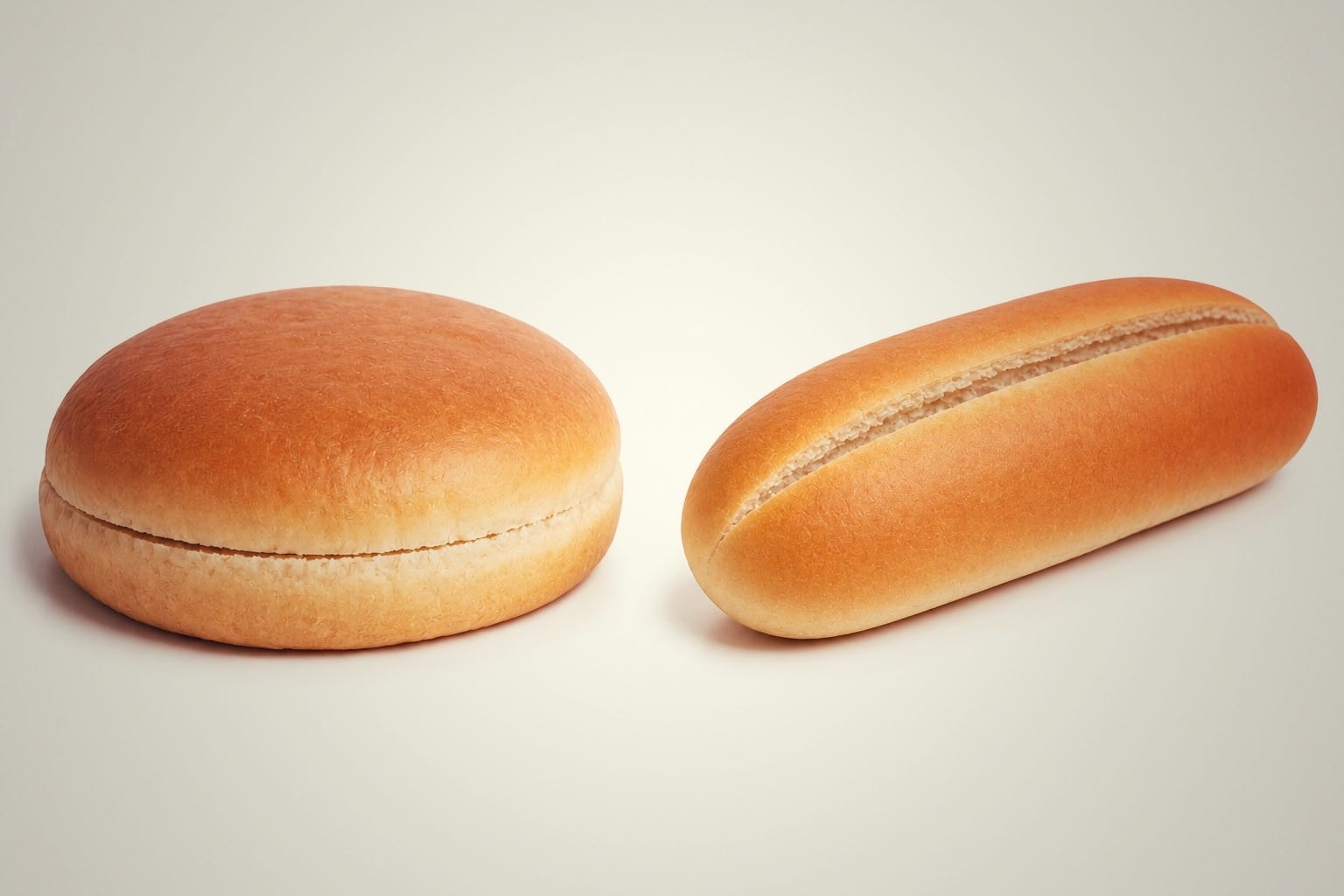
Horizontal slicing differs from conventional bread slicing. Instead of cutting a loaf into multiple slices, it divides a single product into an upper and lower section. Typical applications include burger buns, bagels, hot dog buns, hoagie rolls and flat rye breads.
The first question when selecting horizontal slicing equipment is whether the product requires a full cut or a hinge cut. This single decision determines the most suitable cutting technology and influences how the product behaves during packaging and downstream handling.
Horizontal slicers mainly use either band blade or disc blade technology. While both slice products horizontally, they are designed for different applications.
A band blade uses a continuous moving blade that passes completely through the product. Because the blade exits the product immediately after cutting, both halves remain accurately aligned. This makes band blade technology the preferred choice whenever the product needs to be fully separated while maintaining consistent positioning for packaging or further processing.
A disc blade uses a rotating circular blade that cuts from one side while leaving the opposite edge intact. The result is a hinge cut where the product opens like a book but remains connected. This format is widely used for burger buns, bagels and similar products.
Although a disc blade can technically make a complete cut, the blade remains surrounded by product throughout the cut, creating considerably more friction. This often causes the two halves to separate or shift position, making band blade technology the more reliable solution for full-cut applications.
The Splitter-B is designed specifically for industrial full-cut applications. Products are processed in two parallel lanes while an adjustable band blade slices completely through the product. Depending on product flow, the machine can process up to 14,000 products per hour.
One of the main advantages of the Splitter-B is that both halves remain perfectly aligned after cutting. This simplifies both manual handling and automated packaging, where consistent product orientation is essential for reliable operation.
For bakeries producing a wider product range, the machine can also be equipped with blade oiling. Reducing friction allows the Splitter-B to process dense rye breads and gluten-free products in addition to standard soft buns.
The Discslicer is intended for applications where the product should remain connected after slicing. Using a 320 mm disc blade, it creates a consistent hinge cut while allowing operators to adjust blade height, conveyor height and cut depth for different products.
Available in both single and double lane versions, the machine is suitable for burger buns, hot dog buns, hoagie rolls and bagels. The double lane version can also be configured to create a butterfly cut for products that need to open flat while remaining connected.
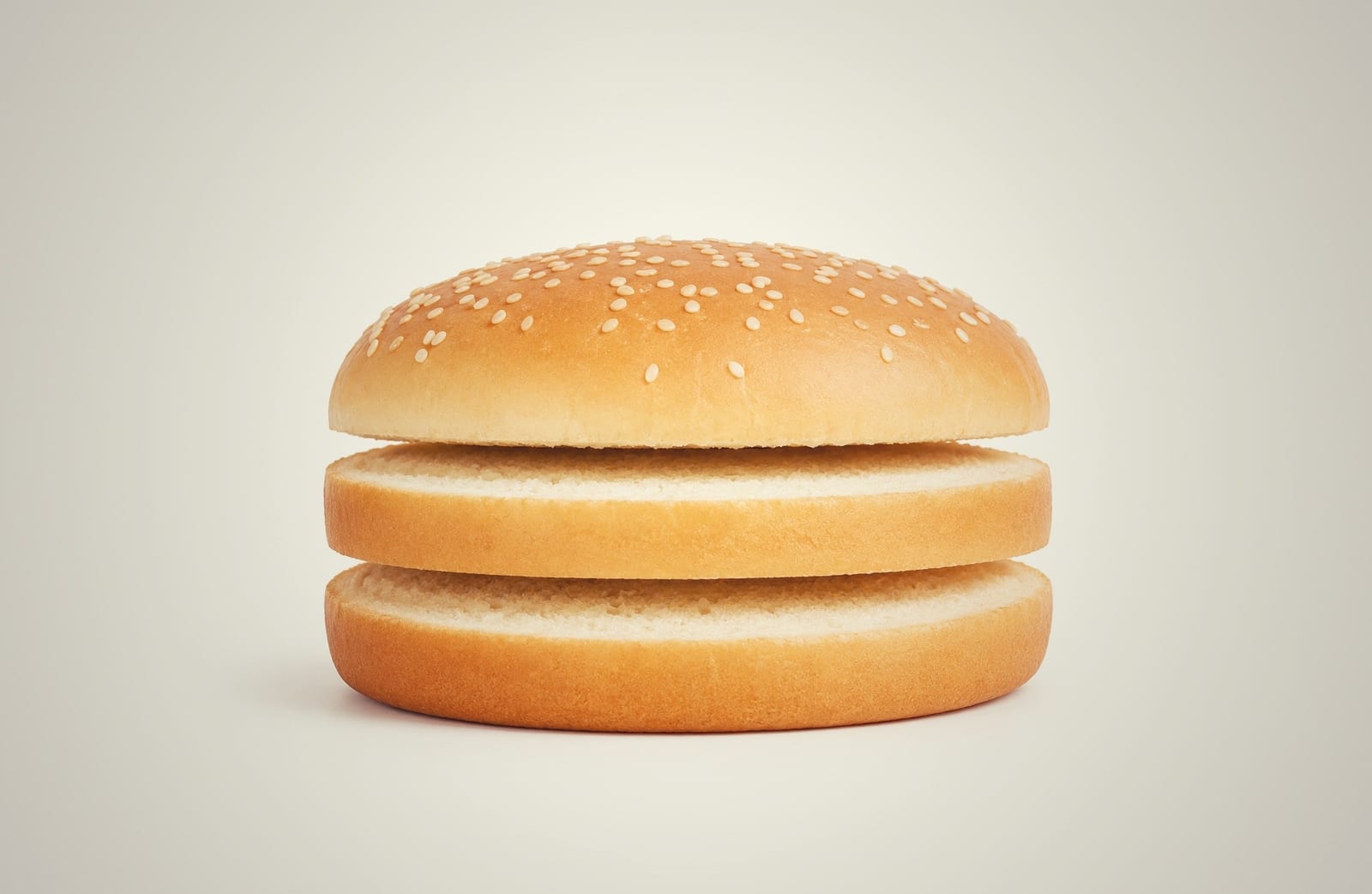
For manufacturers producing three-piece burger buns, the Splitter-B2 combines two independently adjustable band blades in a single machine. Instead of passing the bun through multiple machines, both cuts are completed in one operation.
Programmable presets automatically position both blade units and overhead conveyors for different products, reducing changeover time while ensuring consistent cutting results. Like the standard Splitter-B, the machine maintains accurate alignment between all bun sections throughout the process.
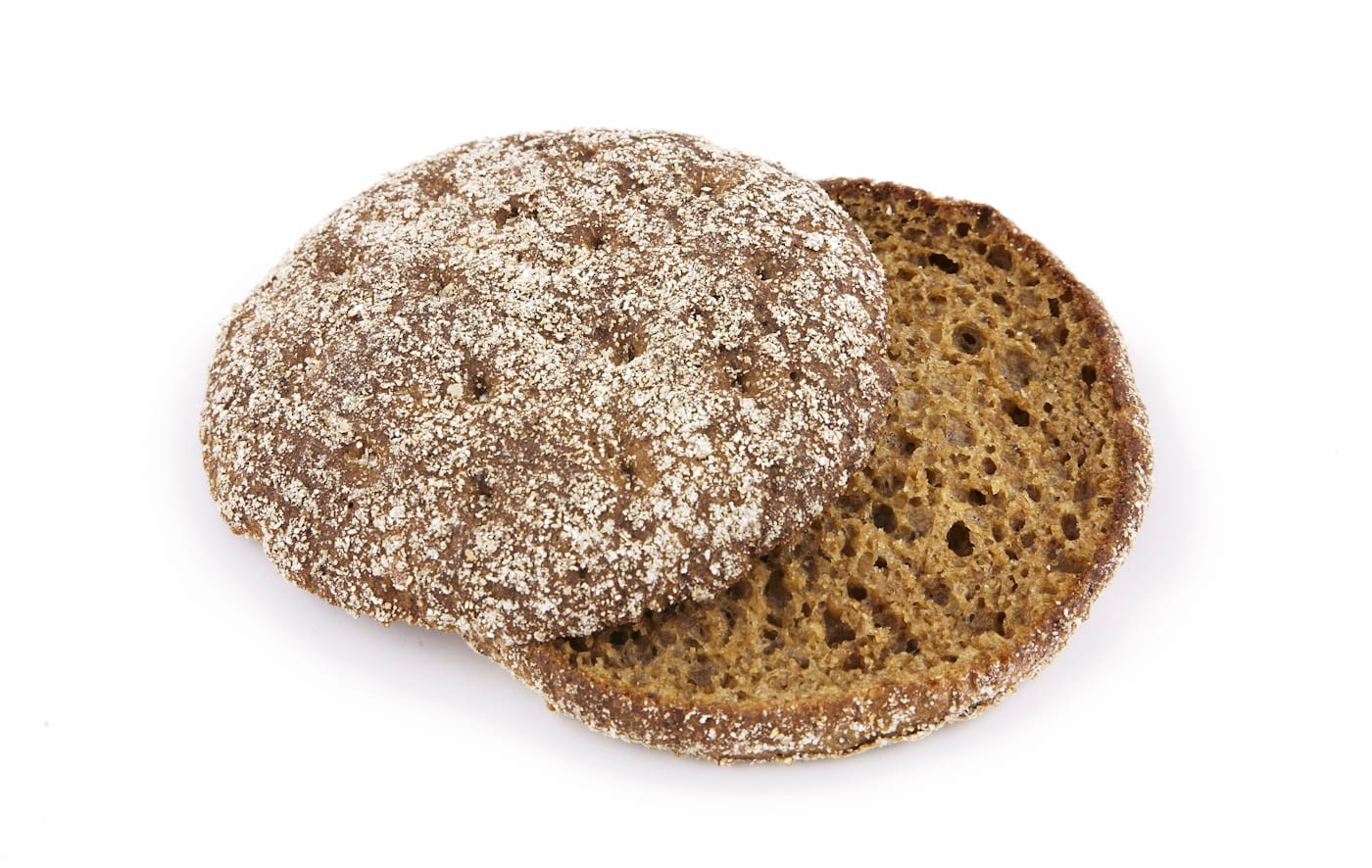
Not every product benefits from a clean slice. The Splitter2 is designed specifically for Finnish-style flat rye bread, where a rough torn surface is part of the traditional product appearance.
Rather than cutting with a blade, the machine creates a textured interior that matches consumer expectations for these products. Because of this tearing action, it is intended only for dense rye breads and is not suitable for soft bakery products.
The choice of horizontal slicer depends primarily on the desired cut type, followed by product characteristics and production requirements.
If the product must be completely separated while keeping both halves accurately aligned, a band blade machine such as the Splitter-B is the most suitable solution. If the product should remain connected for filling, the Discslicer provides a consistent hinge cut. For three-layer burger buns, the Splitter-B2 offers efficient dual-cut capability, while traditional Finnish flat rye bread requires the dedicated Splitter2.
Product dimensions, density, packaging requirements and overall production capacity should also be considered when selecting equipment. Matching the slicer to both the product and the downstream production line ensures reliable operation and consistent product quality.
Every bakery has different products, capacities and production goals. Choosing the right horizontal slicing technology is therefore about more than machine specifications—it is about selecting the cutting method that best supports your complete production process.
If you are unsure which solution fits your application, Ipeka can help evaluate your products and recommend the most suitable horizontal slicing technology.
Learn more about horizontal slicing solutions at Bunslicer.com.
Band blade slicers use a continuous loop blade that creates full cuts where upper and lower halves remain precisely aligned after cutting. Disc blade slicers use a rotating circular blade that creates hinge cuts where one edge stays intact. The band blade design (Splitter-B) suits applications requiring precise half alignment for automated packaging, while disc blade design (Discslicer) suits products like burger buns and bagels where a hinged format is specifically desired.
While technically possible to cut completely through with a disc blade, this creates significant friction when the blade is fully between the upper and lower sections. This friction typically causes halves to separate and shift position unpredictably, making the result unsuitable for automated packaging or applications requiring precise half alignment. For full cut applications, band blade technology provides more reliable results.
The Splitter-B handles products within the 10 to 40 mm blade height range, including small rye breads, burger buns, and certain types of pita bread. When equipped with blade oiling via felt rollers, the Splitter-B can also split rye products and gluten-free bread in addition to soft buns. Products move through in two rows, and the system can achieve up to 14,000 units per hour with constant product flow to both channels.
The Splitter-B2 is an advanced version with two band blade units that enables programmable presets for single or dual cut applications. The primary use is industrial production of layer burgers (Big Mac type) where the bun must be split into three sections in a single pass. The blade units and overhead conveyors automatically adjust to preset positions, allowing efficient switching between different cutting configurations without manual adjustment.
The Discslicer handles products with minimum height of 30 mm and maximum height of 120 mm. The conveyor height, blade height, and cut depth are all infinitely adjustable within this range. The equipment is available in single or double lane versions and uses a 320 mm diameter disc blade to create hinge cuts suitable for burger buns, hot dog buns, hoagie rolls, and bagels.
Blade oiling capability matters when cutting dense, sticky, or gluten-free products alongside soft buns. The Splitter-B can be equipped with blade oiling via felt rollers, which reduces friction when cutting rye products and gluten-free bread. This expands the range of products a single machine can handle. For bakeries cutting exclusively soft white buns, blade oiling represents unnecessary complexity, but for mixed product lines it prevents needing separate dedicated equipment.
This article is based on Ipeka's knowledge base, built up over years of hands-on engineering experience. Every article is reviewed and edited by Ipeka's own experts. Claude (Anthropic) was used to help produce clear, high-quality English text.
