When a bakery produces both soft white bread and dense rye, the slicing equipment faces fundamentally different mechanical demands with each product type.
Soft white bread requires gentle blade action and minimal compression. The light, airy crumb structure compresses easily under pressure. If the cutting action is too aggressive, slices squash rather than separate cleanly. The result is uneven thickness, torn crumb, or compressed loaves that spring back after slicing, creating bagging problems.
Dense rye bread presents the opposite challenge. Firm crumb and thick crust require higher cutting force to penetrate and separate cleanly. Without adequate motor power and blade support, the blade can deflect during the cut, producing angled or irregular slices. Dense products also generate more friction against the blade, increasing heat and potential for gumming, especially with whole grain or rye formulations that contain more oils and starches.
These opposing requirements mean that not every slicer handles both types equally well. A machine optimized for soft bread may lack the power and rigidity needed for dense rye. Conversely, equipment built for heavy-duty slicing may be over-specified and over-priced for bakeries where soft products dominate the mix.
Before specifying slicing equipment, bakeries need to evaluate their specific product mix: the ratio of soft to dense products, production volumes for each type, and whether one category dominates or both run in similar quantities throughout the week.
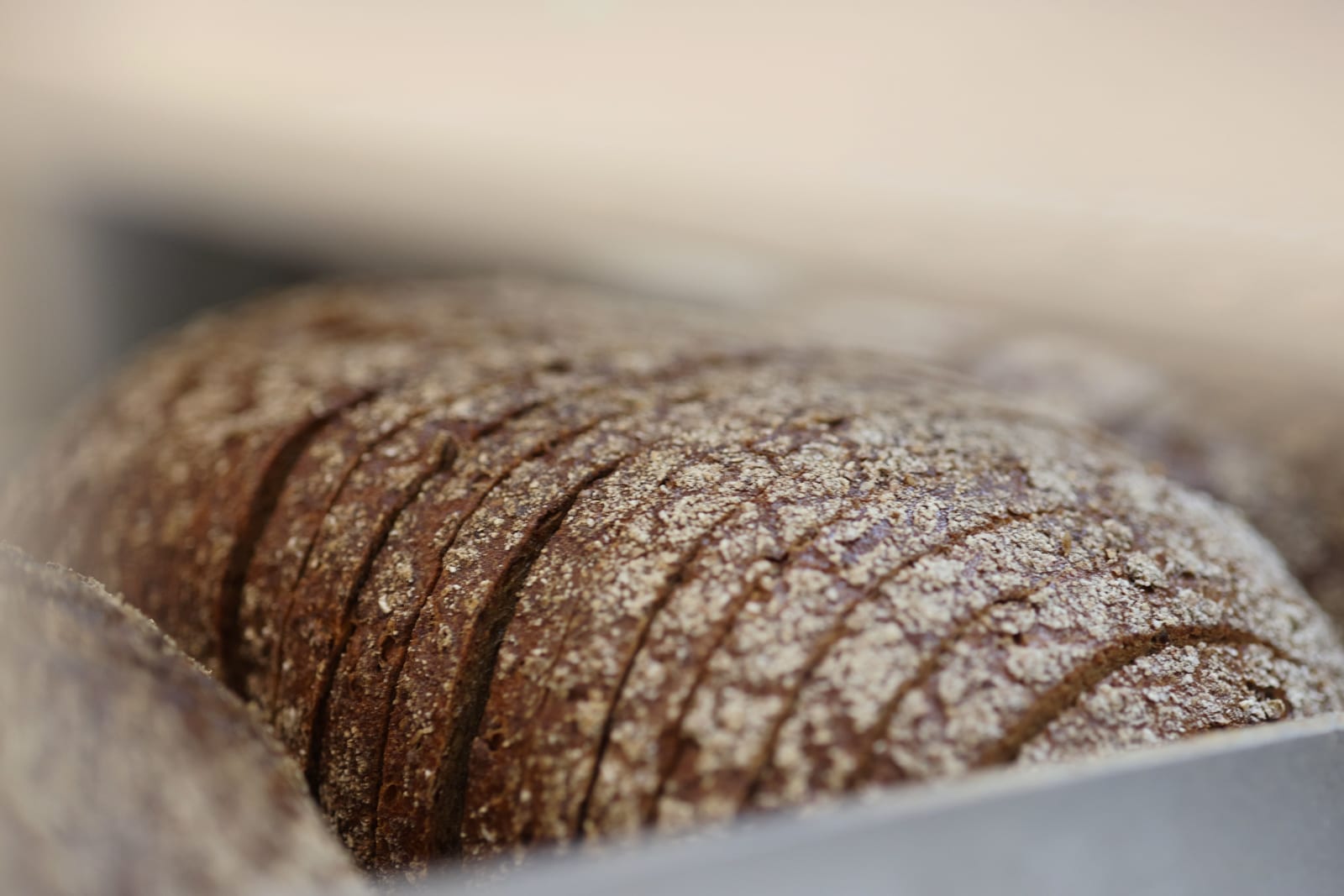
Several technical features determine whether a slicer can handle varied bread characteristics consistently.
Blade support systems provide the structural rigidity that prevents blade deflection when cutting through dense products. Firm blade support keeps the blade vertical and stable under load, ensuring that slices remain parallel and uniform even when cutting thick-crusted rye or whole grain loaves. Without adequate support, the blade can bend slightly during the cut, producing wedge-shaped slices or requiring multiple passes.
Motor power directly affects the slicer's ability to maintain cutting speed through resistant products. Dense rye, crusty artisan breads, and gluten-free formulations all demand more force to cut than soft white bread. Higher power motors maintain consistent blade speed under load, preventing slowdowns that can affect slice quality and throughput. When a motor is under-powered for the product, operators may need to slow the infeed rate or accept reduced quality.
Blade tensioning systems adjust to product resistance during slicing. Load sensor controlled tensioning detects when the blade encounters a denser product and adjusts tension automatically to maintain optimal cutting performance. This prevents over-tensioning (which can compress soft bread) and under-tensioning (which allows deflection with dense bread) without requiring manual intervention when switching between product types.
Blade length affects the cutting angle and slice quality. Longer blades reduce the angle at which the blade enters and exits the product, creating a smoother cutting action with less friction. This matters particularly for dense products, where a shorter blade creates a steeper cutting angle and generates more resistance.
Blade oiling systems reduce friction and prevent gumming when slicing products with varied fat and starch content. An automatic blade oiling system applies a controlled amount of food-grade oil to the blade, facilitating smooth operation across both soft and firm bread types. This becomes essential in mixed-product scenarios where whole grain or rye breads (which tend to gum blades) run on the same equipment as white bread. Without oiling, operators may need to stop production periodically to clean accumulated residue from the blades, a particular issue when switching between product types during a production run.
The importance of blade oiling depends on the specific formulations in production. Some bakeries find it essential; others operate successfully without it. The key consideration is whether it must be specified at purchase, since blade oiling systems are optional equipment on some slicer models and standard on others.
For many bakeries, a single multi-purpose slicer handles soft white bread and moderately dense products successfully, provided the equipment specifications match the production demands. This does not extend to bread that is genuinely dense rye.
This approach works well in several scenarios:
The Masterslicer 1W is designed specifically for this versatile role. Built to withstand heavy industrial use, it is suitable for both white and whole grain breads. The machine handles up to 70 bread loaves per minute, providing sufficient capacity for most medium- to high-volume bakery operations.
Importantly, the Masterslicer 1W can be equipped with an automatic blade oiling system to enable smooth operation with all bread types. This optional feature should be specified if the product mix includes whole grain or rye formulations that benefit from blade lubrication, or if production runs switch frequently between product types without time for blade cleaning between changeovers.
The versatile approach simplifies production planning. Operators work with a single machine interface and maintenance schedule. Product changeovers require only adjustments to infeed timing and possibly slice thickness settings, rather than moving production to a different machine. For bakeries where both product types run regularly but neither dominates overwhelmingly, this operational simplicity often outweighs the benefits of specialized equipment.
However, this approach has practical limits, and rye content is the deciding factor. If rye makes up more than roughly half of the formulation and the loaf is genuinely dense and heavy, Ipeka recommends the Masterslicer 2R without exception, regardless of overall production volume. When rye is a smaller proportion of the formulation and the loaf remains relatively soft, the 1W or E can still handle it, provided blade oiling is fitted. The same logic applies to gluten-free bread: a large, heavy gluten-free loaf typically needs the 2R, while a smaller gluten-free loaf presents less resistance to the blade and the 1W or E is usually sufficient.
Some production environments require equipment specifically engineered for demanding products.
Heavy-duty capability becomes necessary when:
The Masterslicer 2R addresses these requirements directly. This heavy-duty industrial slicer is suitable for all sorts of bread, including hard-crust, thick rye bread above roughly 50% rye content, and other particularly demanding products like large, heavy gluten-free loaves.
Three specifications distinguish the 2R for heavy-duty applications:
An extra powerful 7.5kW motor provides substantially more cutting force than standard industrial slicers. This power maintains blade speed even through the densest products, ensuring consistent throughput without slowdowns or quality compromise.
A 184-inch blade length creates a gentler cutting angle, reducing friction and improving slice quality through resistant products. The longer blade also distributes cutting forces more evenly, reducing wear and extending blade life when processing demanding products regularly.
A smart blade oiling system comes as standard equipment on the 2R. This reflects the reality that bakeries running dense rye and crusty breads regularly will benefit from blade lubrication; it's an integral part of the machine's capability for its intended applications.
The 2R's stainless steel structure provides the rigidity needed to support the blade firmly even under the higher loads generated by dense products.
This level of capability suits bakeries where challenging products dominate the production mix, or where product consistency demands maximum cutting force and blade support. For operations where soft white bread is occasional rather than central to production, the 2R's heavy-duty design ensures that the primary products (dense rye and crusty breads) slice consistently and efficiently.
Beyond the basic ability to slice varied bread types, several operational features affect day-to-day efficiency with mixed product lines.
Automatic slice thickness adjustment becomes valuable when the same production line must deliver different slice dimensions for different customers or markets. This occurs when retail packages require one thickness (often thicker for premium appearance) while food service customers specify another (often thinner to control portion cost), or when product lines themselves demand varied slicing: sandwich bread at one thickness, toast bread at another.
The Masterslicer 1A provides this capability with automatic slice thickness change in ranges such as 10–15 mm, 11–16.5 mm, 12–18 mm, or 14–22 mm. The operator selects thickness from the touch screen interface; the entire adjustment process is fully automatic, including load sensor controlled blade tensioning that adjusts to maintain proper tension as blade spacing changes.
The 1A incorporates firm blade support and handles all bread types, making it suitable for mixed soft/dense production scenarios where thickness flexibility is important.
Whether adjustable thickness is necessary depends on customer requirements and product specifications. Bakeries producing a consistent product mix for a stable customer base often run a single fixed thickness and have no need for adjustment capability. Those serving varied markets or frequently changing slice specifications benefit from the flexibility.
Powered infeed and outfeed conveyors maintain consistent product handling across different bread densities. These conveyors ensure that both light, soft loaves and heavy, dense rye move through the slicing zone at controlled speeds, reducing the risk of jamming or inconsistent feed rates that can affect slice quality. All Masterslicer models include powered conveyors.
Touch screen interfaces simplify operation when switching between products. Rather than mechanical adjustments or complex control panels, operators select product presets or adjust parameters through an intuitive touch interface. All Masterslicer models feature touch screen interfaces, standardizing operation across the product range and reducing training time when operators work with multiple machines.
These operational features don't fundamentally change a slicer's ability to handle soft versus dense bread, but they do affect how efficiently and consistently the equipment performs when production requirements vary.
Choosing the right bread slicer for mixed production requires balancing multiple factors specific to each bakery's operation.
Production volume establishes the baseline capacity requirement. A bakery slicing 500 loaves per shift has different needs than one running 5,000 loaves per shift, even if both produce the same soft/dense product mix.
Product mix ratio determines whether a versatile mid-range slicer suffices or whether heavy-duty capability is necessary. A 90% soft white / 10% dense rye operation has different requirements than a 50/50 mix or a 30% soft / 70% dense scenario.
Product dominance affects the decision framework. If one product type represents the vast majority of production, it may make sense to specify equipment optimized for that dominant product and accept slightly compromised performance on the occasional alternative product.
Slice thickness requirements determine whether automatic adjustment capability is necessary or whether fixed-thickness slicing meets all customer specifications.
Blade oiling must be considered during specification, since it is an optional equipment on Masterslicers. If the product mix includes whole grain or rye formulations, deciding whether blade oiling is necessary should occur before equipment purchase rather than after installation.
Rye content and density should be assessed precisely rather than assumed. If rye content exceeds roughly half the formulation and the loaf is genuinely dense and heavy, the Masterslicer 2R is the standard recommendation regardless of other factors. Lower rye content combined with a relatively soft loaf can still be handled by the 1W or E, provided blade oiling is fitted. The same threshold applies to gluten-free bread: large, heavy loaves typically require the 2R, while smaller gluten-free loaves are usually within reach of the 1W or E.
There is no universal "best choice" for mixed soft/dense production. The optimal slicer depends on the specific combination of these factors for each bakery.
However, some general patterns emerge:
Ipeka has manufactured Masterslicer bread slicers since 1990, over 35 years of experience, with machines operating in 57 countries across diverse bakery environments. This experience base means that technical consultation can draw on real-world operating data from bakeries with similar product mixes and production requirements.
Rather than selecting equipment based solely on published specifications, bakeries benefit from discussing their specific product mix and production requirements with experienced equipment suppliers. Details matter: the exact density of the rye bread, whether crusts are particularly thick, whether gluten-free products are part of the mix, what bag types will be used downstream, and how production schedules rotate through different products during the week.
Contact Ipeka to discuss your specific product mix and production requirements. Our team can help you determine whether a versatile multi-purpose slicer or a heavy-duty model best fits your bakery's needs.
We can provide technical consultation based on your actual products, production volumes, and operational requirements, helping you avoid both over-specification (paying for capability you don't need) and under-specification (discovering after installation that equipment doesn't handle your demanding products consistently).
All Ipeka Masterslicer equipment is designed and manufactured in Finland, backed by decades of engineering experience and a global installed base that demonstrates proven performance in real bakery environments.
It depends on how dense the rye bread actually is. If rye content is above roughly 50% of the formulation and the loaf is genuinely dense and heavy, Ipeka recommends the Masterslicer 2R, regardless of production volume. If rye content is lower and the loaf remains relatively soft, a versatile slicer like the Masterslicer 1W or E can handle both product types, provided it is equipped with blade oiling.
Firm blade support prevents deflection when cutting through dense crumb and thick crust. Higher motor power, such as the 7.5kW motor in the Masterslicer 2R, maintains cutting speed through resistant products. Longer blades reduce cutting angle and friction. Blade oiling prevents gumming with rye formulations. For bread that is genuinely dense rye, meaning rye content above roughly 50% and a heavy loaf, Ipeka recommends the Masterslicer 2R rather than relying on these features individually on a lighter-duty model.
Blade oiling systems reduce friction and prevent gumming, particularly with whole grain or rye breads that contain more oils and starches. Whether you need blade oiling depends on your specific formulations and how frequently you switch between product types. It is optional equipment on some slicer models and standard on heavy-duty models designed for dense breads, so the decision should be made during equipment specification.
The answer depends on production volume, product mix ratio, and whether one bread type dominates. A single versatile slicer simplifies operations and is often the best choice when both products run regularly in moderate volumes. Specialized equipment makes sense when one product type represents the vast majority of production, or when product characteristics are so different that a single machine cannot handle both effectively at required capacity.
The Masterslicer 1A offers automatic slice thickness adjustment in ranges such as 10–15 mm, 11–16.5 mm, 12–18 mm, or 14–22 mm. Thickness is selected from the touch screen interface and adjustment is fully automatic, including load sensor controlled blade tensioning. Whether adjustable thickness is necessary depends on whether you serve different markets requiring different slice dimensions or produce varied product lines with different thickness specifications.
This article is based on Ipeka's knowledge base, built up over years of hands-on engineering experience. Every article is reviewed and edited by Ipeka's own experts. Claude (Anthropic) was used to help produce clear, high-quality English text.
