The oldest evidence of naturally fermented bread dates back more than 5,000 years to Ancient Egypt. For most of human history, sourdough fermentation was not a specialty technique or artisan choice. It was simply how bread was made.
Yet many industrial bakeries today approach sourdough as if it were something new, a trend to be evaluated or a niche to be tested. This perspective misses the point. Sourdough is not a novelty. It is a return to fundamentals that were sidelined for practical reasons in the late nineteenth century but never stopped working.
What has changed is not the biology of fermentation or the principles of starter management. What has changed is the ability to control temperature, hydration, fermentation time, and feeding schedules with the precision that industrial production demands. Modern process control makes it possible to reproduce traditional sourdough methods consistently, at scale, across shifts and production schedules.
This article examines why sourdough fermentation is returning to industrial baking, not as a revolution but as a reintegration of proven techniques. It also explores how Finland preserved one of Europe's oldest sourdough traditions with rye raski, a living culture passed between bakes for generations, and how Ipeka has supported that tradition with liquid sourdough fermentation systems since 1980.
Commercial baker's yeast began replacing traditional sourdough in the late nineteenth century primarily because it offered faster and more predictable production. This shift was not irrational. Yeast allowed bakeries to standardize schedules, reduce labor, and meet the demands of growing urban populations. Speed and consistency were the priorities, and yeast delivered both.
For decades, this approach worked well. But it also meant setting aside the functional benefits that sourdough fermentation provides, benefits that extend well beyond flavor.
Modern bakeries now operate in a different context. Consumers increasingly expect ingredient transparency, longer shelf life without excessive additives, and bread that feels closer to traditional methods. At the same time, production managers face pressure to improve dough handling, reduce waste, and optimize process efficiency.
Sourdough addresses several of these goals simultaneously. It enhances dough handling properties, particularly for rye flour, where it improves the ability to absorb water and produces softer, less crumbly bread. In wheat dough, sourdough increases elasticity, making the dough easier to handle during processing. Fermentation generates not only lactic acid and acetic acid but also many other aroma compounds, contributing to a richer and more developed taste.
Sourdough also prolongs microbial shelf life. Bread fermented with sourdough does not mold as quickly, and the risk of ropiness is dramatically decreased. It increases the nutritional value of bread and can reduce the need for certain additives. These are measurable, reproducible process improvements, not marketing claims.
The question for many bakeries is no longer whether sourdough offers functional advantages. It does. The question is whether it can be produced consistently at the scale and schedule industrial production requires.
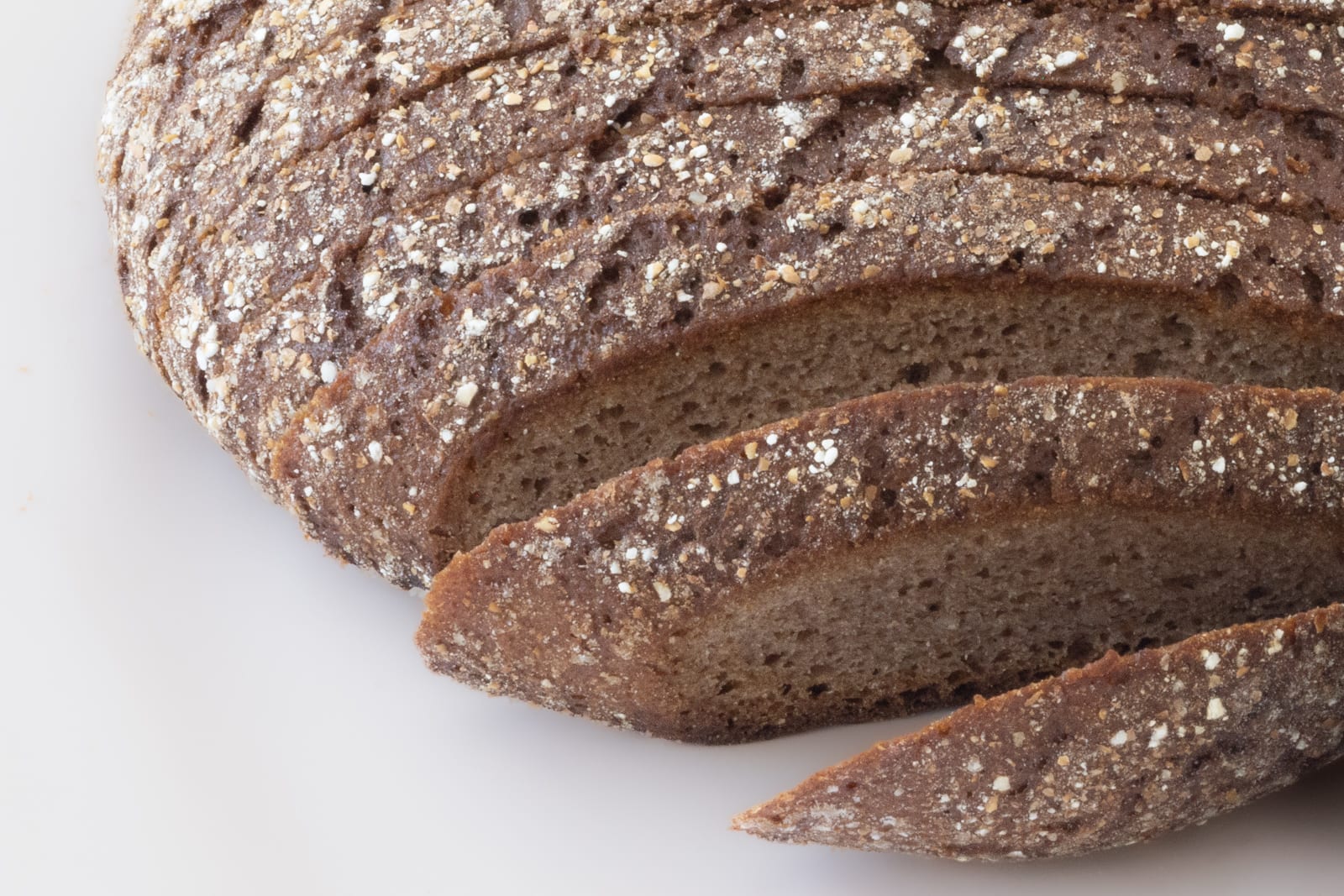
While many countries shifted toward yeast-only baking, Finland preserved one of Europe's oldest sourdough traditions. Common Finnish rye bread has been made using raski, a mature rye sourdough starter passed from one bake to the next, often for generations.
Traditional Finnish raski is almost always based on 100% rye flour and develops over many hours under carefully controlled temperatures. This is not a recent rediscovery or a response to consumer trends. It is an unbroken practice, embedded in Finnish baking culture for centuries and maintained through the industrial era.
The reason raski survived is functional. Rye flour behaves differently from wheat flour. It lacks the gluten structure that wheat provides, so fermentation plays a critical role in dough stability. Sourdough enhances the baking properties of rye flour, increases the dough's ability to absorb water, and results in softer, less crumbly bread. Without sourdough, rye dough is difficult to handle and produces a product with poor keeping quality.
This contrasts with other sourdough traditions. San Francisco sourdough, for example, is primarily celebrated for flavor and crust. Northern European rye sourdough traditions evolved to produce stable rye doughs, improve keeping quality, and create nutritious everyday bread that could remain fresh for days. Both approaches are valid, but they reflect different production goals and different bread types.
In Finland, the survival of raski meant that the knowledge base for large-scale sourdough production never disappeared. Almost all big and middle-size Finnish bakeries have maintained sourdough fermentation as part of their standard process, and Ipeka has supported that production with liquid sourdough systems since the early years of the company.
This continuity matters. Finland did not need to rediscover sourdough. It needed to scale it, automate it, and integrate it into modern production lines without losing the characteristics that made it work in the first place.
Sourdough is often described as a specialty ingredient or a way to add flavor complexity. Both are true, but both understate what sourdough fermentation actually contributes to industrial bread production.
Sourdough is simultaneously a baking aid, an aroma producer, and a preserving agent. It also increases the nutritional value of bread. Each of these roles delivers measurable process or product improvements.
For rye flour, sourdough enhances the baking properties in ways that are difficult to achieve otherwise. It increases the ability of the dough to absorb water, resulting in softer, less crumbly bread. Rye flour lacks the gluten structure of wheat, so fermentation becomes a critical part of dough stability and handling.
For wheat dough, sourdough increases elasticity, making the dough easier to handle during processing. This can improve rolling properties, reduce tearing, and support more consistent shaping across production runs.
In sourdough, not only lactic acid and acetic acid are formed, but also many other aroma compounds. These compounds contribute to a richer and more developed taste that consumers increasingly associate with premium bread. The aroma profile is more complex than what can be achieved with yeast alone, and it develops naturally through the fermentation process.
Sourdough prolongs microbial shelf life. Bread fermented with sourdough does not mold as quickly, and the risk of ropiness is dramatically decreased. This is a functional advantage for both retail distribution and consumer satisfaction. It also means that sourdough can reduce the need for certain additives, though it does not eliminate the need for all additives.
Sourdough fermentation increases the bioavailability of minerals and raises the overall nutritional value of bread. This happens through the breakdown of phytic acid during fermentation, a process that makes minerals more accessible for absorption.
These are not marketing claims. They are reproducible effects of controlled fermentation, and they apply whether the sourdough is produced in a small batch or in a large industrial system. The challenge is maintaining consistency at scale.
Traditional sourdough principles have not changed. A mature starter is refreshed with flour and water, fermented under controlled conditions, and incorporated into the final dough. The biology is the same whether the batch is five kilograms or five thousand.
What changes at industrial scale is the margin for error. A small bakery can adjust fermentation time by feel, compensate for temperature variation with experience, and manage starter health through observation. Industrial production does not have that flexibility. A bakery running multiple shifts, producing hundreds or thousands of loaves per hour, cannot rely on intuition or manual adjustments.
Industrial sourdough demands repeatability. The same starter must produce the same fermentation profile every day, across different operators, at different times of year. Without that repeatability, sourdough becomes a source of variation rather than a solution.
Four parameters define sourdough fermentation, and all four must be controlled with precision:
Temperature. Fermentation rate, acid production, and microbial balance all depend on temperature. A few degrees of variation can shift the flavor profile, change the dough's handling properties, or alter the timing of the entire production schedule. Rye sourdough typically ferments over many hours under carefully controlled temperatures. Wheat sourdough often requires cooling to prevent overfermentation.
Hydration. The ratio of water to flour affects fermentation rate, starter viscosity, and ease of transfer to mixers. Liquid sourdough systems allow for consistent dosing, but only if the hydration ratio is repeatable from batch to batch.
Fermentation Time. The length of fermentation determines acid development, aroma complexity, and starter maturity. Time must be controlled not just in hours and minutes, but in relation to temperature and hydration. A longer fermentation at lower temperature produces a different result than a shorter fermentation at higher temperature, even if the total acidity is similar.
Starter Management. A portion of each batch must be retained to seed the next fermentation. This is traditional practice, but it requires precise dosing. Too much starter shortens fermentation time. Too little extends it and risks inconsistent microbial balance. The starter must also be fed on a regular schedule to maintain activity.
Without precise control of these parameters, sourdough becomes unpredictable at scale. This is why automation became necessary. Not to replace traditional methods, but to reproduce them consistently under industrial conditions.
Ipeka began developing industrial liquid sourdough fermentation systems in 1980. This was three years after the company was founded with the CL-35 packaging machine, and a decade before the first Masterslicer bread slicer entered production in 1990.
The timing was not coincidental. In Finland, rye sourdough never disappeared from industrial production. Almost all big and middle-size Finnish bakeries have an Ipeka sourdough station. The technology developed to support that unbroken tradition, not to recreate it.
From the beginning, Ipeka's approach has been custom engineering rather than standardization. Every bakery has its own fermentation philosophy. Some prefer long, slow fermentation at lower temperatures. Others optimize for faster cycles with tighter temperature control. Some produce only rye sourdough. Others run wheat, rye, and mixed fermentations in the same facility.
Ipeka engineers systems that match each customer's recipes, capacities, and production methods rather than offering a standard machine. The control principles are the same, but the equipment is tailored to the specific production requirements.
This custom approach reflects a practical reality. Sourdough fermentation is not a plug-and-play process. It is a living system that must be integrated into the bakery's existing production schedule, mixer capacity, and product lineup. The equipment must support the bakery's chosen fermentation parameters, not impose a different process.
The result is field-proven reliability. Ipeka sourdough systems have been running in Finnish bakeries for more than four decades, supporting daily production of traditional rye bread and a growing range of wheat and specialty sourdoughs.
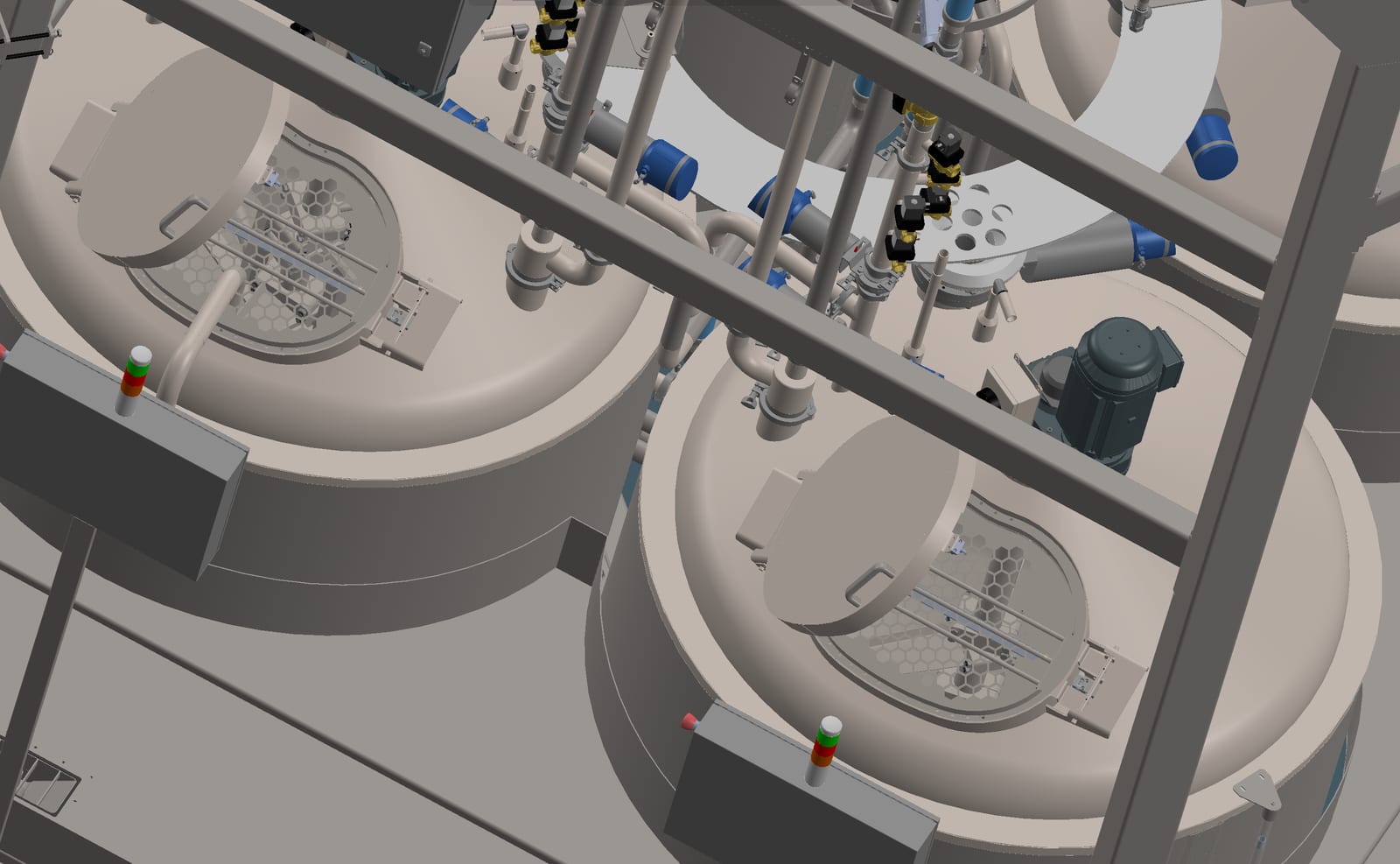
An industrial liquid sourdough system must perform the same fundamental tasks as traditional batch fermentation, but with the precision and automation that repeatable production demands. Ipeka systems are engineered around this principle: reproduce the fermentation process consistently, batch after batch, shift after shift.
Ipeka sourdough stations are heat-insulated and manufactured of stainless steel. Around the container and at its bottom there is a water jacket equipped with heating elements. This construction allows for precise temperature control during fermentation, which is critical for maintaining consistent microbial activity and acid development.
For wheat sourdough production, systems are equipped with a cooling system. This is necessary because wheat fermentation often requires lower temperatures than rye fermentation to prevent overfermentation and maintain the desired flavor profile. For large systems, Ipeka provides cold water source (ice bank) and hot water source when necessary to support rapid temperature adjustment and maintain tight control across multiple fermentation cycles.
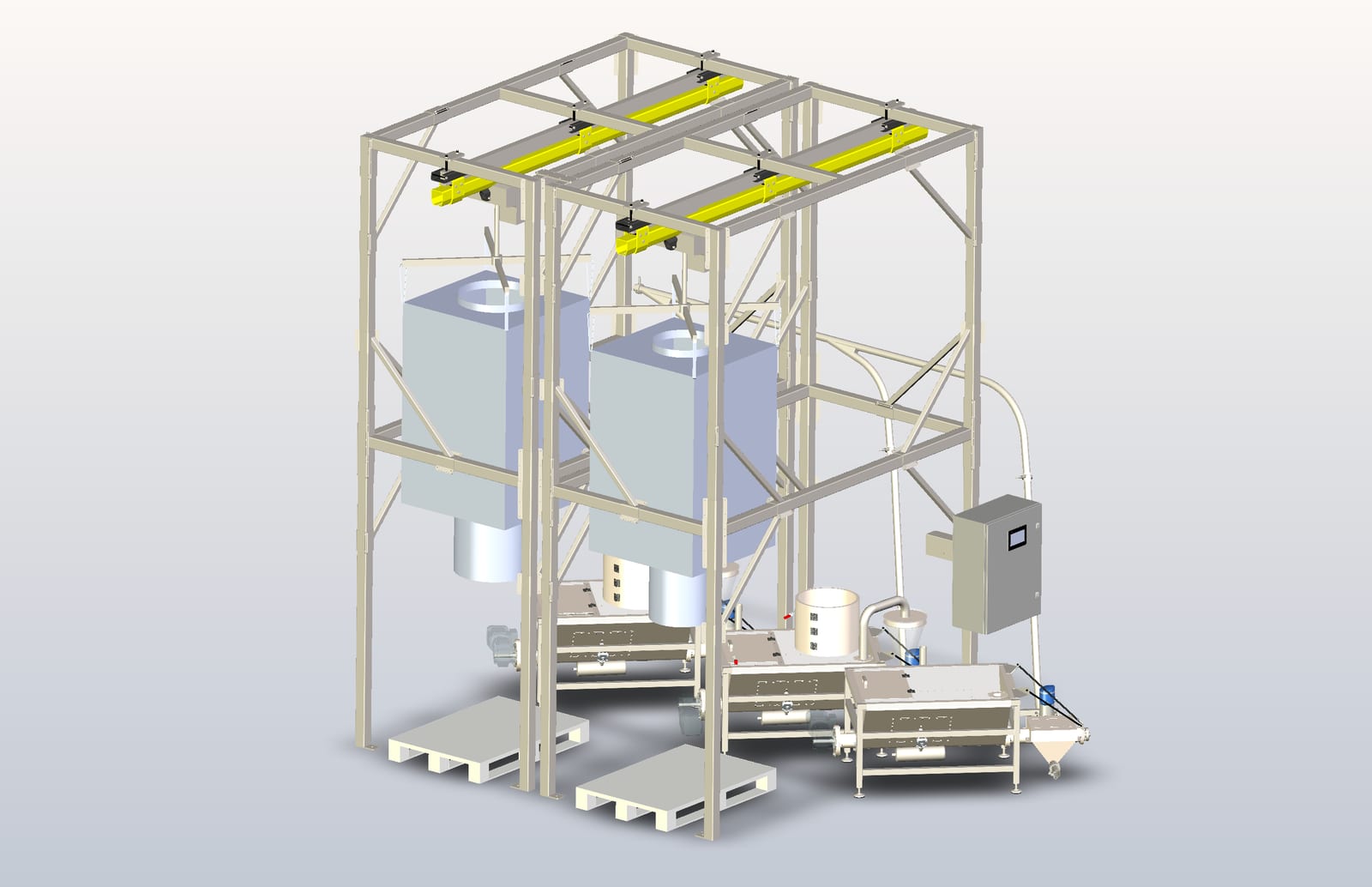
Consistent hydration ratios require accurate dosing. The standard flour feeder usually consists of a container of 300 or 500 liters with horizontal and vertical flour feeding screw. The flour container is equipped with wheels for mobility.
In large-scale sourdough systems, flour can be supplied either directly from flour silos or through an Ipeka discharge station for big bags. Screw conveyors feed the flour into a pneumatic conveying system, where it is transported by airflow to the dosing point, ensuring reliable and hygienic ingredient handling.
Water dosing is integrated into the system, ensuring that each batch receives the correct ratio of flour to water according to the programmed recipe.
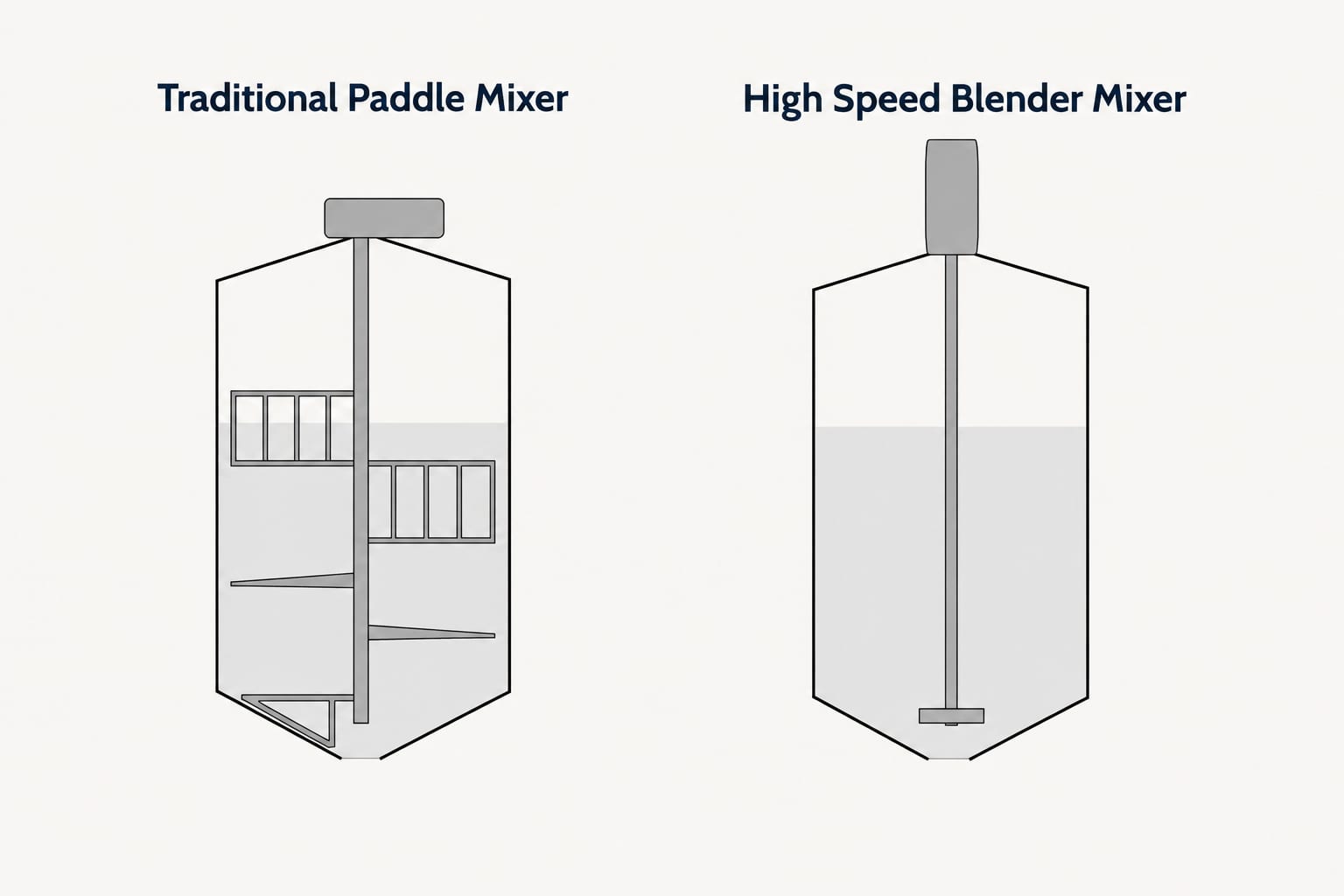
At the top of the container there is access for flour intake, and a mixing unit is fixed to the cone-shaped lock of the container. The mixer has stainless mixing blades and the rotating direction can be chosen according to the steering program.
The mixing system can be either the traditional paddle mixer or high-speed blender type of mixer. The choice depends on the bakery's fermentation philosophy and the characteristics of the sourdough being produced. Paddle mixers provide gentle, thorough mixing suitable for traditional long fermentation processes. Blender-type mixers offer faster, more intensive mixing for systems optimized for shorter cycles or higher hydration ratios.
A critical part of repeatable sourdough production is starter retention and feeding. At the bottom of the container there is an outlet pipe equipped either with a manual or automatic dosing valve. The system retains a precise amount of mature starter from each batch to seed the next fermentation, and automatically feeds it with fresh flour and water according to the programmed schedule.
When fermentation is complete, the system automatically transfers mature sourdough to mixers. This eliminates manual handling, reduces the risk of contamination, and ensures that the sourdough arrives at the mixer at the correct temperature and maturity.
The entire sourdough process is controlled automatically by PLC and touch display HMI. Easy-to-use touch display HMI makes recipe programming smooth and provides clear information during the process. Operators can program temperature profiles, fermentation times, hydration ratios, mixing schedules, and starter refresh parameters. The system then executes the recipe without manual intervention, reproducing the bakery's chosen fermentation parameters consistently.
This level of automation does not replace the need for fermentation knowledge. It requires that knowledge up front, when the recipe is defined. Once programmed, the system ensures that the same process happens every time.
Each system is designed and sized to match the bakery's production volume, mixer capacity, and product lineup. A small bakery producing traditional rye bread might require a single 500-liter tank. A large industrial plant running multiple shifts and producing several sourdough-based product lines might need a multi-tank system with total capacity exceeding 20,000 liters.
The control principles remain the same across the range. What changes is the scale of the equipment and the integration requirements with the rest of the production line.
Adding liquid sourdough to an industrial production line is not a matter of installing a machine and turning it on. It is a process integration project that begins with defining what you want the sourdough to do and how it will fit into your existing schedule and product mix.
Before engineering a system, the bakery must answer several questions. What temperature profile will the fermentation follow? What hydration ratio is required for your dough formulation? How long will the fermentation cycle take? How much starter will be retained and refreshed for each batch? Will the system run continuously, or in batches timed to match mixer schedules?
These parameters are not arbitrary. They determine the flavor, acidity, dough handling properties, and shelf life of the final product. A bakery producing traditional rye bread with a long, slow fermentation at moderate temperature will have a different set of requirements than a bakery producing wheat sandwich bread with a faster, cooler fermentation optimized for mild flavor and improved dough elasticity.
Ipeka works with each bakery to engineer a system tailored to their specific recipes and production requirements. This is not a standardized offering. It is custom engineering based on the bakery's chosen fermentation philosophy.
Liquid sourdough systems are used across a wide range of bakery products. Rye bread is the most traditional application, and the one for which Ipeka first developed fermentation systems in 1980. Wheat bread is increasingly common, particularly for products where improved shelf life, reduced additive use, or enhanced flavor are production goals. Specialty breads, including mixed rye and wheat formulations, benefit from the functional and sensory contributions of sourdough. Mixed product lines can be supported by a single fermentation system with recipe control, allowing the bakery to produce different sourdoughs for different products without changing equipment.
The key is integration. The sourdough system must deliver mature starter to the mixer at the right time, in the right quantity, and at the right temperature. This requires coordination with mixer schedules, dough formulation, and overall production flow.
It is worth restating: automation does not replace traditional sourdough methods. It reproduces them consistently at the scale and schedule industrial production demands.
The biology of fermentation, the role of temperature and time, the importance of starter management, all of these remain unchanged. What automation provides is the ability to execute the same process every day, without variation introduced by manual handling, ambient temperature changes, or operator judgment.
This is not about making sourdough faster or simpler. It is about making it repeatable. For industrial bakeries, repeatability is what allows sourdough to move from a specialty technique to a standard production method.
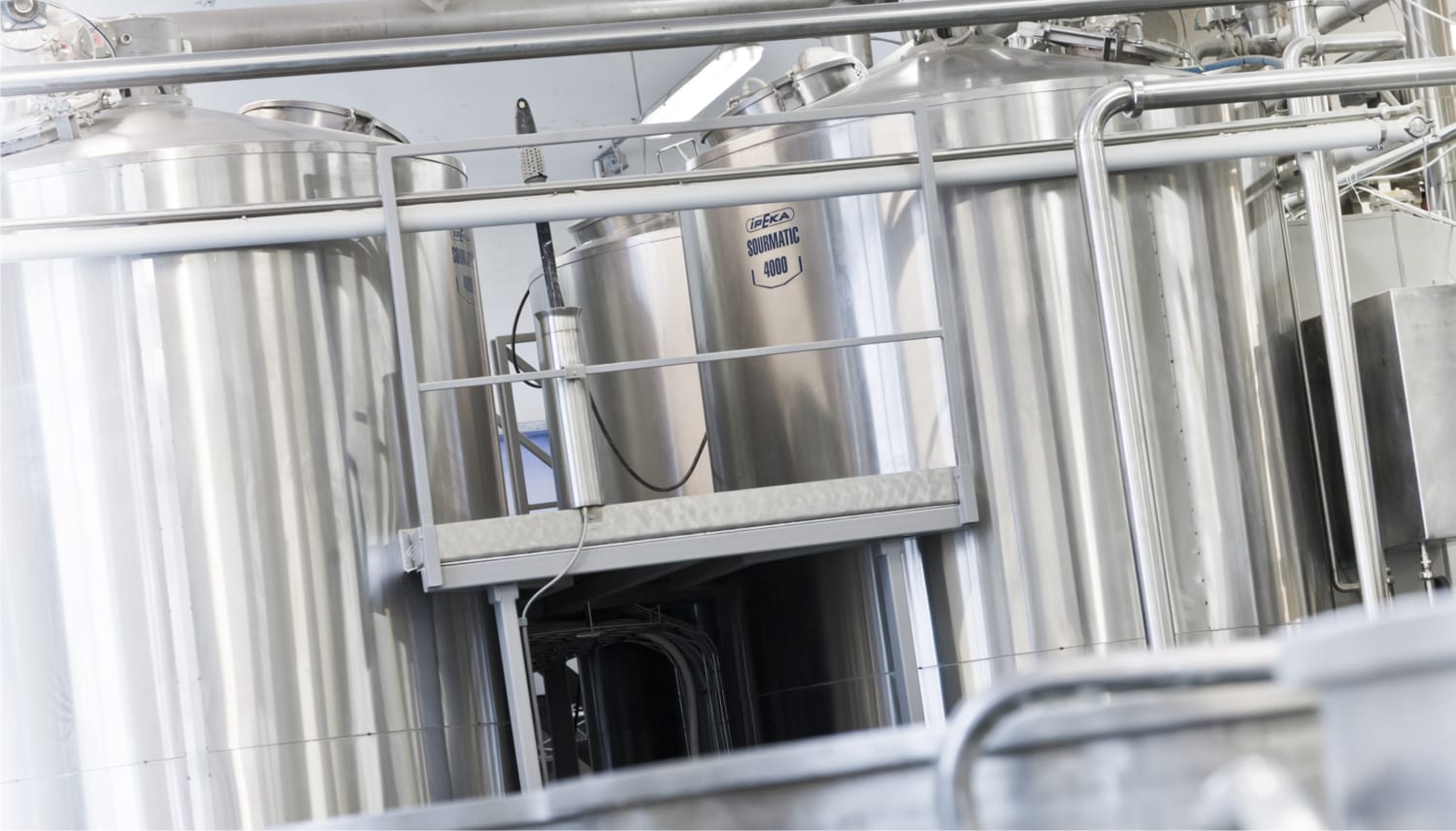
Industrial adoption of liquid sourdough fermentation is not about chasing trends or responding to consumer fads. It is about reintegrating proven baking fundamentals that deliver measurable functional, sensory, and shelf life benefits.
Sourdough improves dough handling, increases mineral bioavailability, extends shelf life, reduces the need for certain additives, and produces richer flavor and aroma. These are not marketing claims. They are reproducible effects of controlled fermentation, and they apply whether the sourdough is produced in a small batch or in a large industrial system.
What has changed is not the principles of sourdough fermentation. What has changed is the ability to control temperature, hydration, fermentation time, and starter management with the precision that industrial production demands. Modern process control makes it possible to reproduce traditional sourdough methods consistently, at scale, across shifts and production schedules.
Ipeka has supported industrial sourdough production since 1980, beginning with rye sourdough tanks for Finnish bakeries and expanding to large, fully automated liquid sourdough fermentation systems. Most big and middle-size Finnish bakeries have an Ipeka sourdough station, a testament to field-proven reliability built on more than four decades of experience with living fermentation systems.
If your bakery is considering liquid sourdough, the first step is defining your fermentation philosophy. What temperature profile, hydration ratio, fermentation time, and starter management schedule will deliver the product characteristics you need? Once that is clear, the equipment can be engineered to support it.
Ipeka designs and manufactures customized liquid sourdough fermentation systems tailored to each bakery's recipes, production volume, and process requirements.
For more information about Ipeka's sourdough systems and other bakery automation equipment, contact us to discuss your specific production requirements.
Contact Ipeka to discuss a customized liquid sourdough fermentation system tailored to your bakery's recipes, production volume, and process requirements.
Commercial baker's yeast offered faster and more predictable production. This allowed bakeries to standardize schedules, reduce labor, and meet the demands of growing urban populations. Speed and consistency were the priorities, and yeast delivered both. However, this shift also meant setting aside the functional benefits that sourdough fermentation provides beyond flavor.
Sourdough is simultaneously a baking aid, aroma producer, and preserving agent. It improves dough handling properties (particularly for rye flour), increases elasticity in wheat dough, generates complex aroma compounds, prolongs microbial shelf life, dramatically decreases the risk of ropiness, reduces mold growth, increases mineral bioavailability, and can reduce the need for certain additives. These are measurable, reproducible process improvements.
Raski is a mature rye sourdough starter passed from one bake to the next, often for generations. Finnish raski is almost always based on 100% rye flour and develops over many hours under carefully controlled temperatures. While traditions like San Francisco sourdough are primarily celebrated for flavor and crust, Northern European rye sourdough traditions evolved to produce stable rye doughs, improve keeping quality, and create nutritious everyday bread that could remain fresh for days.
Four parameters must be controlled with precision: temperature (affects fermentation rate, acid production, and microbial balance), hydration (the ratio of water to flour affects fermentation rate and starter viscosity), fermentation time (determines acid development and aroma complexity), and starter management (precise retention and feeding schedules maintain consistent microbial activity). Without precise control of these parameters, sourdough becomes unpredictable at industrial scale.
Ipeka engineers systems that match each customer's recipes, capacities, and production methods rather than offering a standard machine. Every bakery has its own fermentation philosophy. Systems are customized based on the bakery's chosen temperature profiles, hydration ratios, fermentation times, and production volumes. The smallest systems have tank volumes of approximately 100 liters (The smallest tanks have mainly been supplied to research institutes and universities for scientific research purposes), while the largest have total volumes of more than 20,000 liters. The entire process is controlled automatically by PLC with touch display HMI for recipe programming.
No. Automation reproduces traditional methods consistently at the scale and schedule industrial production demands. The biology of fermentation, the role of temperature and time, and the importance of starter management all remain unchanged. What automation provides is the ability to execute the same process every day, without variation introduced by manual handling, ambient temperature changes, or operator judgment. This is about making sourdough repeatable, not faster or simpler.
This article is based on Ipeka's knowledge base, built up over years of hands-on engineering experience. Every article is reviewed and edited by Ipeka's own experts. Claude (Anthropic) was used to help produce clear, high-quality English text.
