Automation can reduce labor costs, increase production capacity and make bakery production more efficient. But how do you know whether an automation investment actually makes financial sense?
ROI (Return on Investment) is a simple way to compare the financial benefits of an investment with its cost. In bakery automation, it helps answer practical questions such as how much money the equipment could save each year, how quickly the investment could pay for itself, and what the financial benefit could be over its lifetime.
A simple ROI calculation can provide a surprisingly good answer.
Use our calculator below to estimate the payback period and long-term return of a bakery automation investment.
Enter your own figures — the results update as you type.
The figures shown are an estimate based on the values you enter. Use the average total cost of one working hour to the employer, and the contribution from additional production rather than its total sales value. Changing the currency converts every amount at the day's indicative exchange rate; the rates are not a quotation.
For many bakery automation projects, labor is the biggest and easiest saving to calculate.
If automation reduces a process from four operators to two, the annual saving can be estimated from:
Operators saved × average labor cost per hour × annual production hours
There is usually no need to make this calculation unnecessarily complicated. Instead of using the employee's basic hourly wage, use the average total cost of one working hour to the employer.
In many countries, a commonly used multiplier can be applied to the basic wage to account for employer taxes, pension and social contributions, holiday and sick-leave costs, and other employment-related expenses. In bakery production, it may also be appropriate to include typical additional costs such as night-shift, weekend or other shift premiums.
As an employer, you probably already have a reasonable estimate of the average total hourly cost of this type of production work. For an initial ROI calculation, that figure is usually accurate enough.
Also consider whether reducing labor at one process creates an actual saving. If the same employees are simply moved elsewhere, the benefit may instead be avoiding future recruitment or allowing more production with the existing workforce.
Both can be valuable, but they are not exactly the same thing.
Sometimes increased capacity is more valuable than labor savings.
If a new system allows you to produce 30% more during the same production hours, that additional capacity can have considerable value.
However, estimating the value of potential future sales is usually the most difficult part of an ROI calculation. Unless you have already secured contracts or orders that you can start fulfilling once the new production line is operational, there is inevitably some uncertainty about how much of the additional capacity you will actually be able to sell.
For this reason, it is usually wise to use a conservative estimate rather than build the ROI calculation around optimistic sales expectations. You can also calculate the ROI both with and without the expected additional sales to see how much the investment depends on future growth.
And when additional production is included, it is generally better to use the additional contribution or profit generated by those products rather than their total sales value.
For many equipment investments, payback period is the easiest number to understand:
Payback period = Total investment ÷ Annual net benefit
For example:
After the investment has paid for itself, the equipment may continue producing financial benefits for many years.
This is easy to overlook.
Imagine that a semi-automatic solution costs €100,000 and saves two operators, while a fully automatic solution costs €300,000 and saves three.
The fully automatic system saves more labor – but the additional €200,000 investment only eliminates one additional operator.
Depending on operating hours and labor costs, the simpler solution could provide a much better return.
Production flexibility matters as well. A bakery producing a few products in long runs is very different from one producing many products in small batches.
Frequent product and packaging changes can reduce the benefits of extensive automation considerably.
The goal should therefore not be to achieve the highest possible level of automation, but the right level of automation for your production.
One final point is particularly important in bakery automation:
Removing one bottleneck may simply create another.
There is little financial benefit in doubling packaging capacity if slicing, cooling, baking or another upstream process cannot supply products at the required rate.
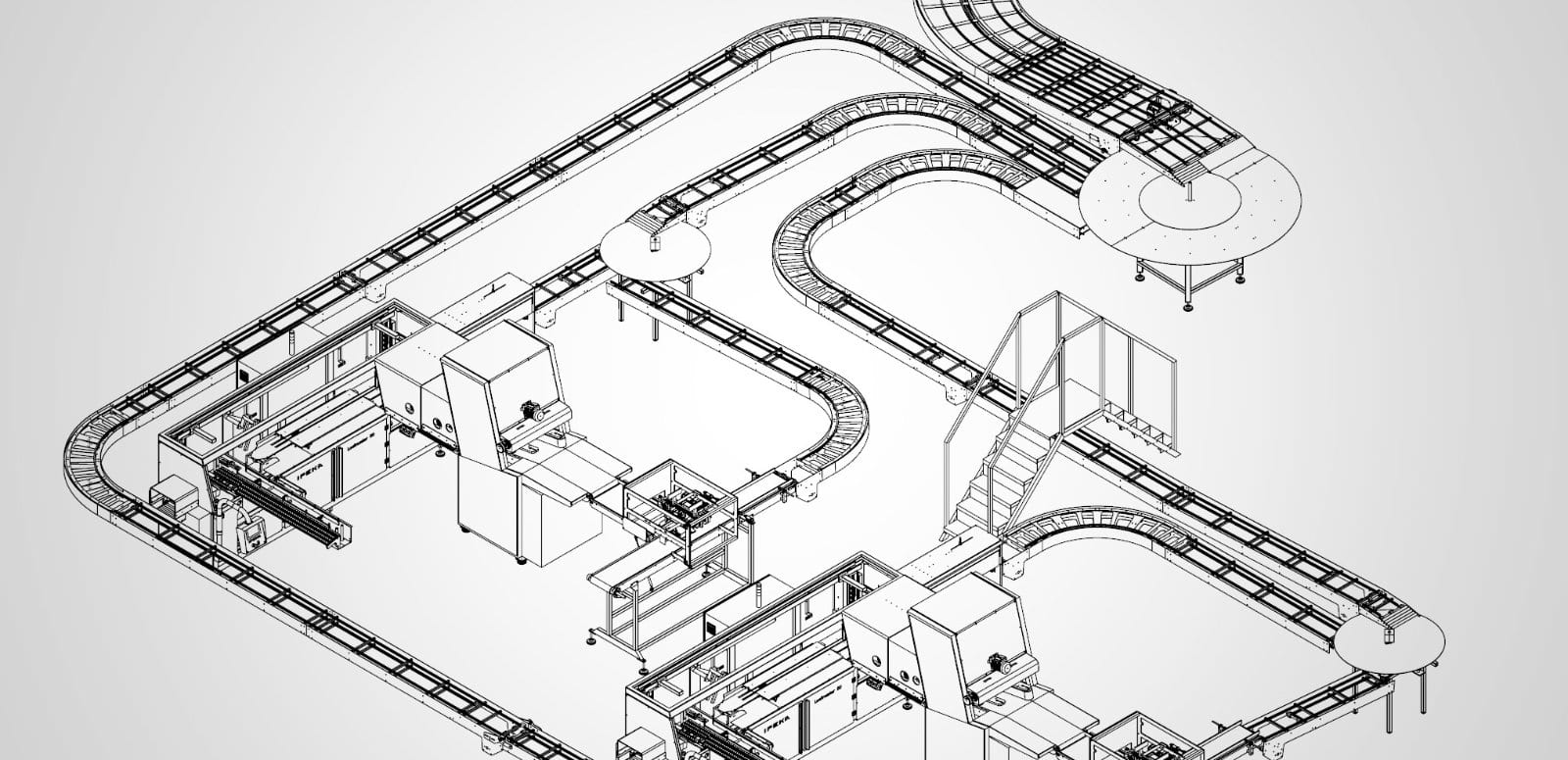
ROI should therefore be considered for the complete production process – not just for an individual machine.
Every bakery is different, so there is no universal payback period that makes an automation investment good or bad.
The most useful approach is to enter realistic numbers and see what they mean for your particular production.
Use the Ipeka Bakery Automation ROI Calculator to estimate your:
You can enter your figures in euro and see the results converted into your own currency at the current daily exchange rate.
And remember: the best automation investment is not necessarily the one that automates the most. It is the one that provides the best combination of financial return, capacity and flexibility for your bakery.
There is no universal payback period, as it depends on labor costs, production hours, capacity utilization and the specific automation implemented. Payback periods can range from less than two years to five years or more. The key is to calculate the specific return for your production using realistic numbers for labor savings, additional capacity and operating costs.
Additional capacity should only be included if you can actually sell the additional production. Unused capacity has no financial value. When additional production is included, use the additional contribution or profit generated by those products rather than their total sales value, as raw material and other variable costs must still be covered.
Not in every situation. A semi-automatic solution may provide better ROI than a fully automatic one if the additional investment required for full automation does not generate proportional savings. Production flexibility also matters: frequent product and packaging changes can reduce the benefits of extensive automation. The goal is the right level of automation for your production, not the highest possible level.
This article is based on Ipeka's knowledge base, built up over years of hands-on engineering experience. Every article is reviewed and edited by Ipeka's own experts. Claude (Anthropic) was used to help produce clear, high-quality English text.
