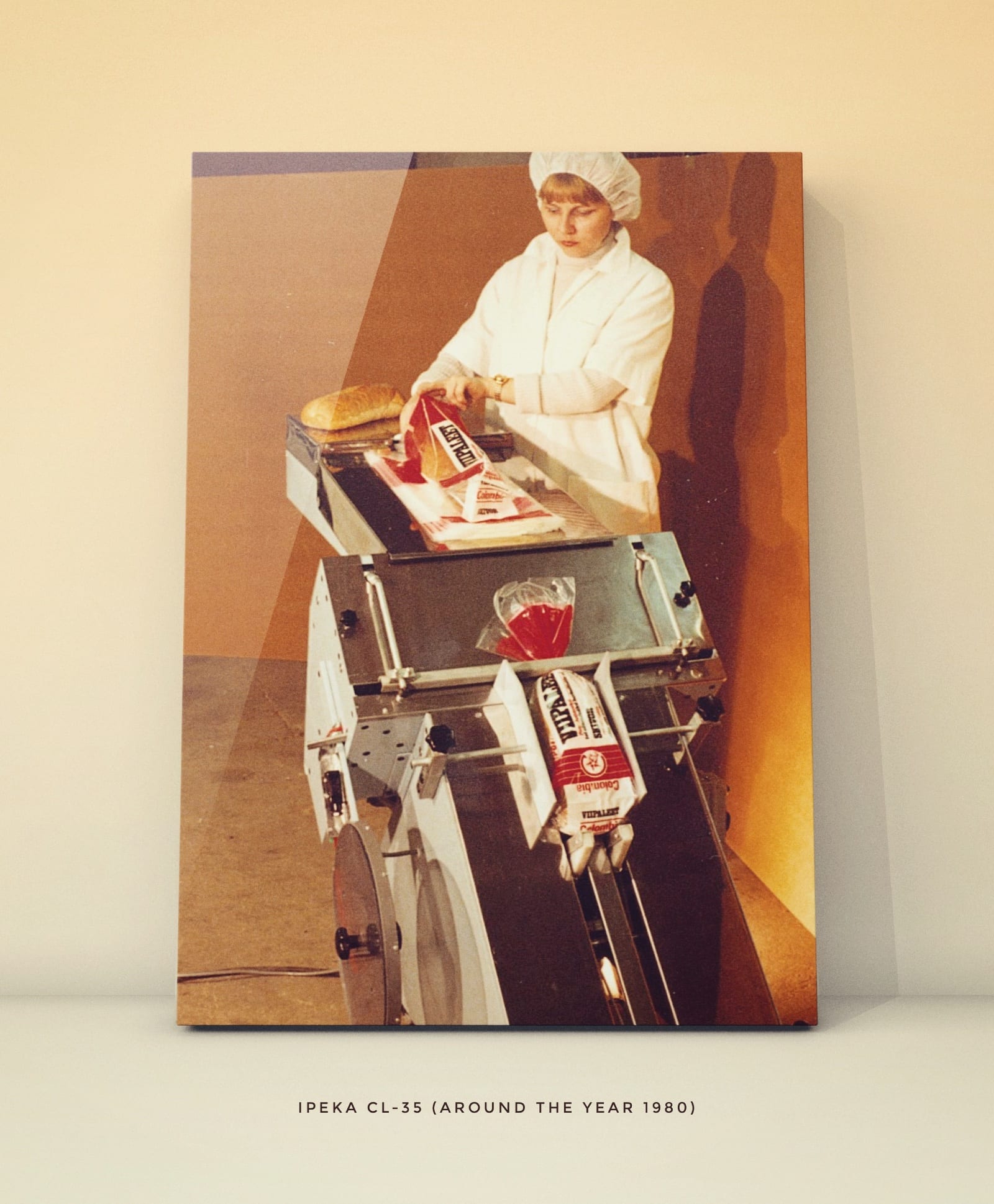
In 2027, the Ipeka CL-35 will mark 50 years since it was first introduced. The machine that began Ipeka's story is still working in bakeries around the world, and new machines continue to find their place in growing businesses.
More than a thousand CL-35 machines have been delivered over the decades. Some have been in service for generations of bakery employees, and Ipeka still receives machines more than 45 years old for maintenance. The model has also adapted to new products and production setups, from pita bread to flowpack packaging.
Its lasting appeal comes down to practical qualities: straightforward operation, dependable mechanics, easy maintenance and the flexibility to handle different products. These are the qualities that have made the CL-35 a bakery industry classic.
The story of the CL-35 began with its founders, Kauko Kuusinen and Ilpo Nieminen. They knew each other from their work at Tuomo Halonen Oy, now Elecster Oyj. The company made machinery for the dairy industry, including equipment for packaging milk in plastic bags.
During the 1970s, Finnish bakeries were looking for ways to mechanise more of their work. Tuomo Halonen Oy established a bakery equipment department, which Kuusinen, a salesman, helped lead. Nieminen had begun at the company as a machinist and progressed into machine design. He was a talented, self-taught designer with a practical understanding of both components and mechanisms.
Tuomo Halonen Oy eventually chose to focus on dairy machinery and leave the bakery equipment business. Kuusinen moved to Kotelotehdas, a manufacturer of various plastic enclosures. But the idea of making bakery packaging easier stayed with him.
At Kotelotehdas, Kuusinen and Nieminen often watched a pressure-forming machine at work. Its movements were coordinated by mechanical eccentrics and linkages. The two men saw how one drive could control several operations in a carefully timed sequence. That idea would help shape their own machine.
In 1977, they founded Ipeka and built the CL-35, their first machine. The company's name preserves a link to its founders: "Ipe" was Ilpo's familiar nickname, and "Ka" comes from Kauko. Both men have since passed away, but their names remain part of the company they created.
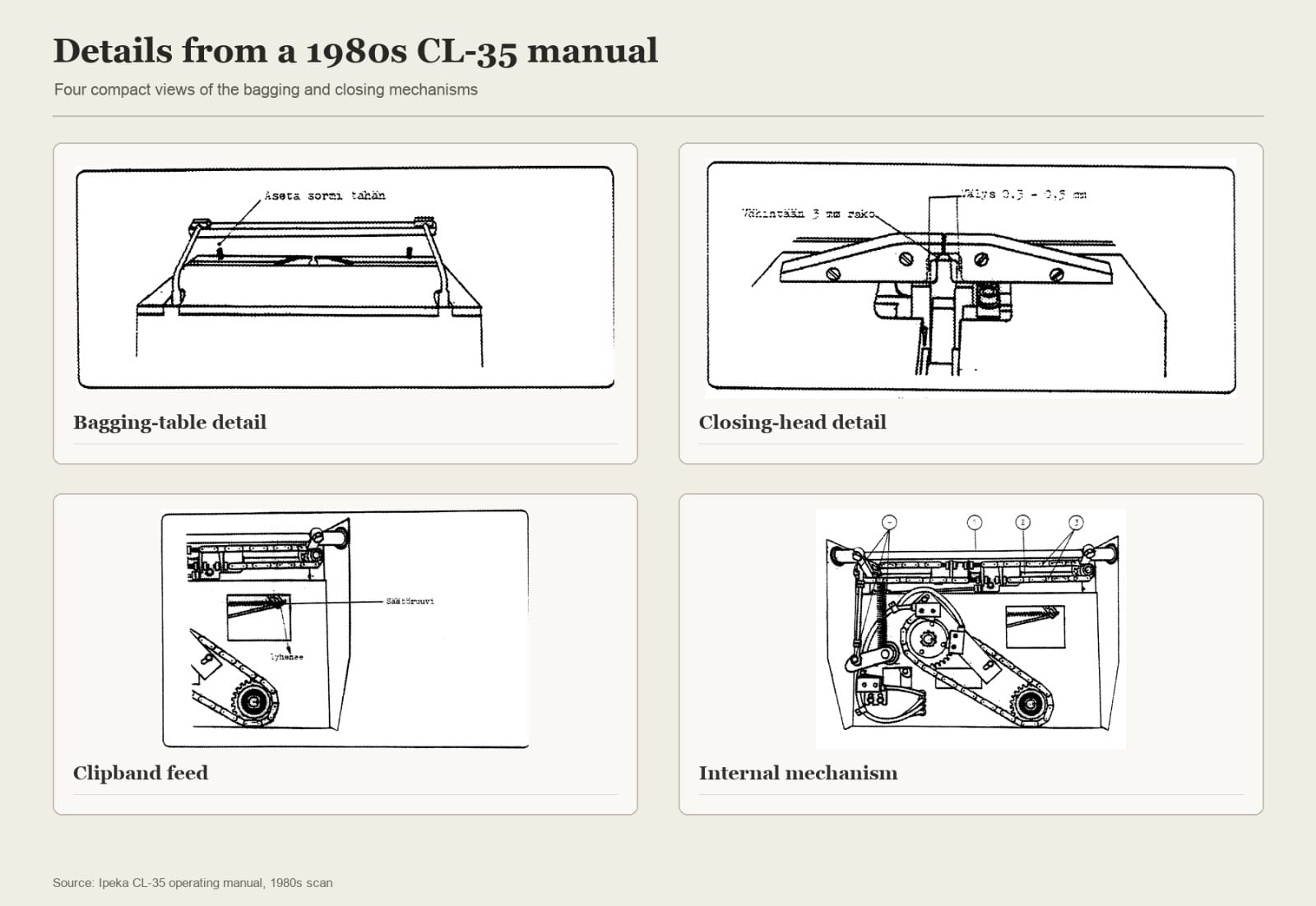
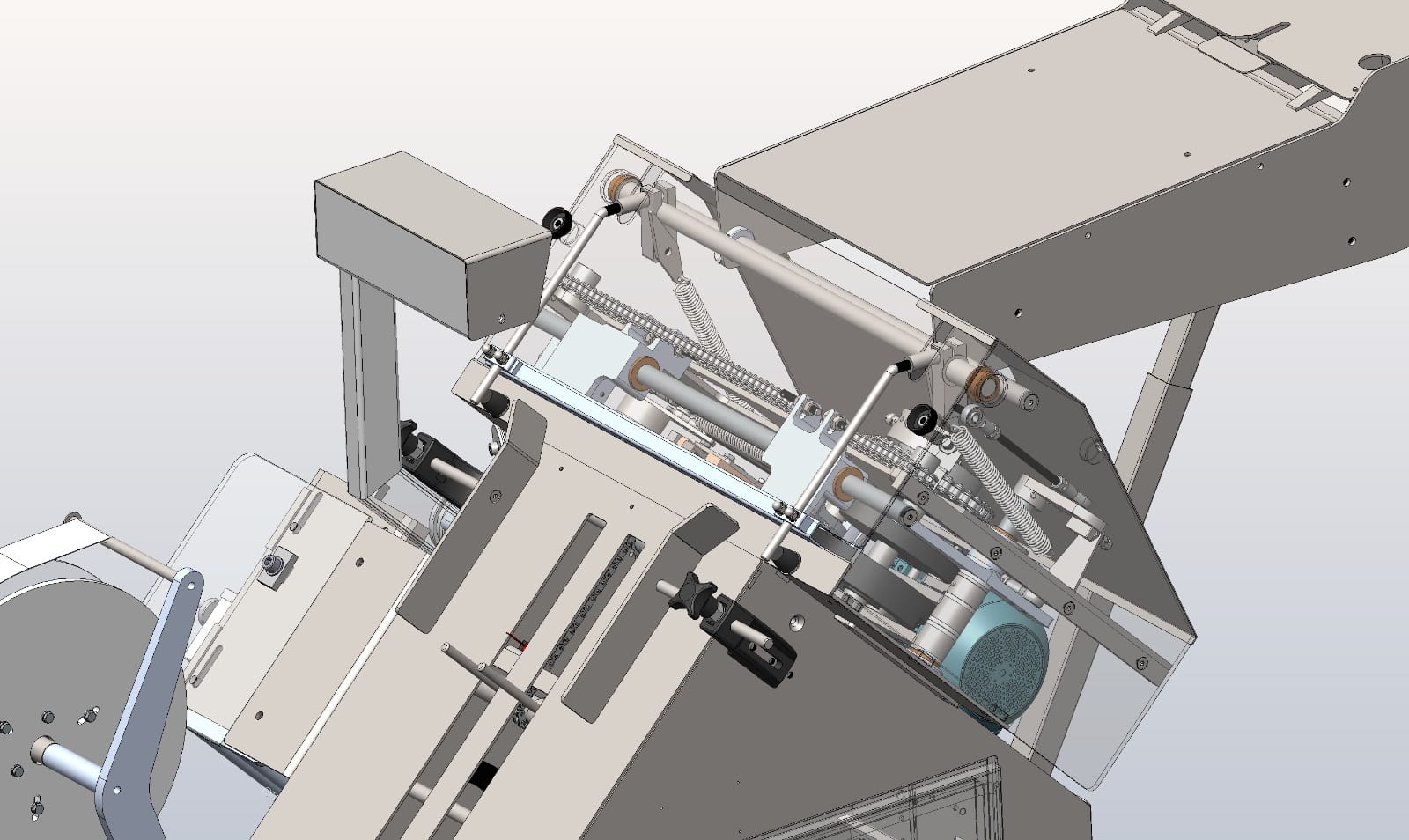
At the heart of the CL-35's closing mechanism is a geared motor driving two eccentrics. A set of levers coordinates the movements needed to close a filled bag. The mechanism feeds and cuts the clipband, gathers the bag mouth and forms the clip around it. It also moves the stopper pins that hold the product in position during closing.
Because these operations are mechanically linked, each takes place at the right point in the cycle. The machine does not need pneumatic components or a compressed-air connection.
The operating principle has remained recognisable since the original design, while the machine's controls and components have been improved over time. Early CL-35 machines used an electronic control board made in-house and microswitches for detection. Today, the control programme runs in a Yaskawa frequency drive. SICK photocells detect the product at the closing position and monitor the clipband supply.
Mechanical parts have also evolved. The original cast-iron levers have been replaced by machined levers, and high-quality cam follower bearings contribute to the durability of the mechanism. The result is a familiar working principle refined through decades of development and service experience.
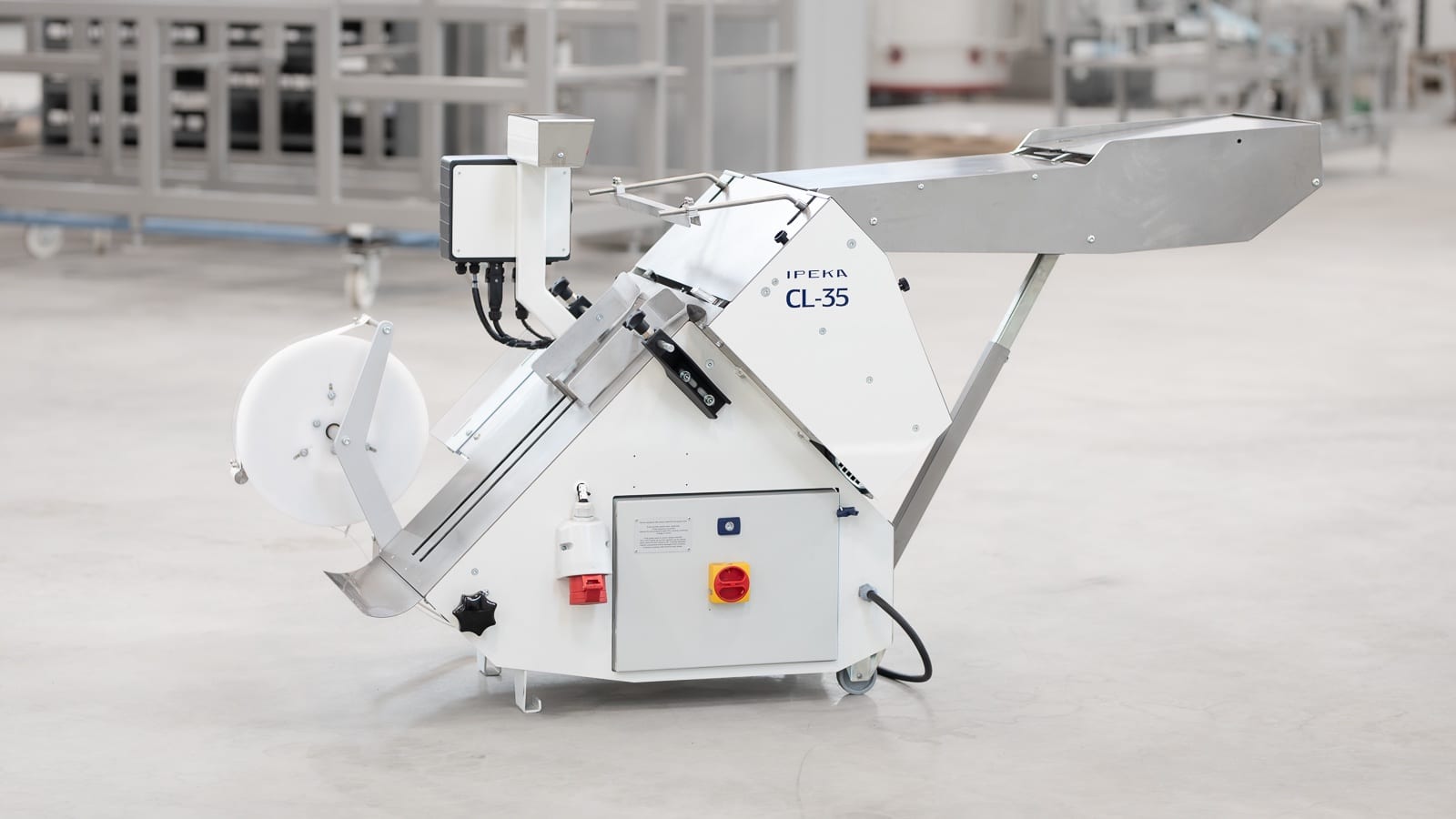
For the operator, the CL-35 is designed to make the daily routine straightforward. At the bagging table, airflow opens the top bag. The operator places the product inside and guides the filled bag to the closing position. The CL-35 gathers the bag mouth, applies the clip and completes its cycle, ready for the next package.
The ergonomic layout makes the machine easy to learn and use. Its space and adjustment options accommodate large bags and products, giving bakeries flexibility in what they pack. Safety is built into the working sequence: the bag press must reach its lower position before the bag-gathering parts can move.
Dependable performance and simple maintenance matter just as much as ease of use. The CL-35 has no pneumatic components to maintain, and its mechanical cycle is straightforward for service staff to inspect. With the machine disconnected from its electrical supply, the mechanism can be turned through a cycle by hand, helping a technician observe its movements during adjustment or servicing.
Ipeka still sees machines more than 45 years old come in for service. With basic maintenance and occasional replacement of wear parts, a CL-35 can remain useful for decades. Ipeka expects spare parts to be available for the next 50 years, too. Fortunately, they do not need replacing very often.
The CL-35 is also competitively priced. Customers comparing it with the main German alternative value its straightforward operation as well as its purchase price.
The CL-35 is used in growing bakeries around the world. For some, it is the main packaging machine. As production expands and a bakery adds automated equipment, the CL-35 often stays alongside the new line.
That gives the bakery a flexible packaging option when the automatic line is undergoing a changeover, cleaning, servicing or another intervention. Products can still be bagged and closed while work takes place on the main line.
In this way, the CL-35 can serve a bakery through different stages of growth: first as a primary machine, and later as a dependable partner to a more automated production setup. Its place in the bakery can continue to make sense even as the equipment around it changes.
Most CL-35 machines delivered today are used for conventional bread packaging. Applications include everyday bread, round loaves and sliced bread. The machine's role in pita packaging is a newer chapter in a much longer history.
Over approximately the past ten years, the CL-35 has found a growing market among pita bakeries. Dozens of bakeries use it across Europe, the Middle East, North America and South America. Pita is commonly packed in stacks, and the CL-35's roomy working area makes it easy for an operator to place a stack in an open bag and guide it to the closing position.
With suitable factory settings, a standard CL-35 can be configured for normal-sized pita breads. Ipeka has also developed an extra-wide version for pita breads with exceptionally large diameters.
The CL-35 can close suitable paper bags as well. Its closing mechanism is strong and durable enough to gather and secure them, extending the machine's use beyond conventional plastic packaging.
One application that has gained popularity in recent years is placing a CL-35 after a flow wrapper, or flowpack machine. In this setup, the CL-35 adds a clipband closure to a flowpack, giving consumers a package they can open and close again.
The packs move directly from the flow wrapper to the CL-35. There is no bagging table or air blower in this configuration. Instead, the flowpack is made with a little extra length at the end, leaving a "tail" for the clipband. The tail is flattened before closing so that air is not trapped inside it when the clip is applied.
This arrangement has become popular for confectionery bags in Europe and bread bags in South America. It shows how the CL-35's familiar closing mechanism can fit into a different packaging process and give a standard pack a convenient resealable feature.
The CL-35's history connects the early development of Finnish bakery machinery with the everyday work of bakeries on several continents. Its mechanical principle has endured, its controls and components have evolved, and its uses have expanded.
For some bakeries, it remains the main packaging machine. For others, it is a reliable companion to an automatic line. It packages everyday bread and pita stacks, closes suitable paper bags, and adds a resealable clipband finish to flowpacks.
A machine becomes a classic through years of continued use. Nearly 50 years after the CL-35 began Ipeka's story, it still meets the need that inspired its founders: making everyday packaging easier.
This article is based on Ipeka's knowledge base, built up over years of hands-on engineering experience. Every article is reviewed and edited by Ipeka's own experts. Claude (Anthropic) was used to help produce clear, high-quality English text.
